What Is Cloud Computing in Healthcare? A Guide for Clinics & Hospitals
As a clinic owner, you will have heard the term “move to the cloud” from every software vendor that has ever phoned your practice. It gets used so loosely that it’s almost ...
Start your 90 day free trial – All Features, Zero Cost – No Credit Card Required
Share Article
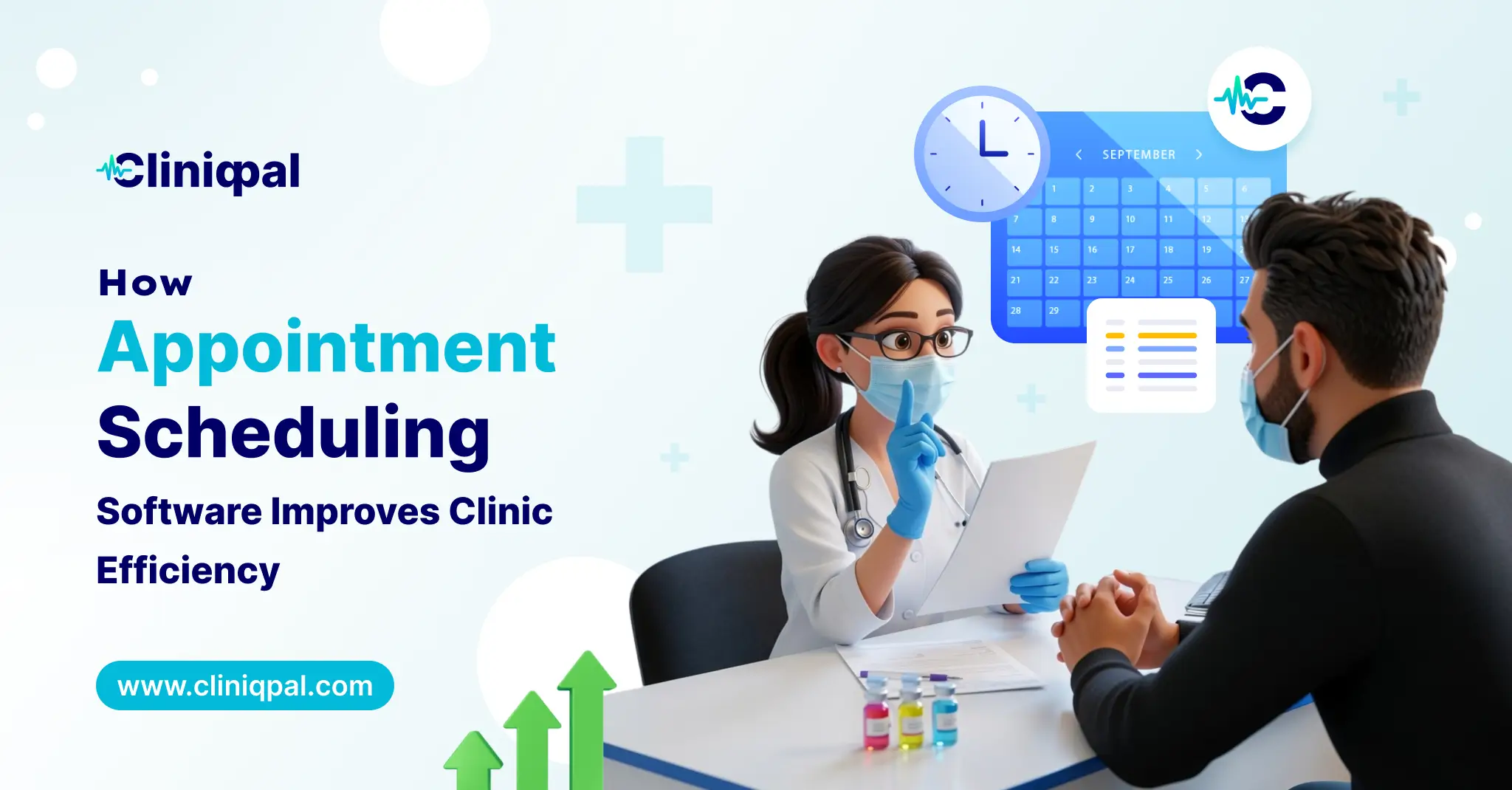
Once you have run a clinic in India for more than a couple of years, you already know how patient expectations have changed. No one wants to call in and be put on hold. They just want to book an appointment, be confirmed, and go about their business, as you would when booking a flight ticket or salon slot.
That change is precisely what appointment scheduling software transitioned from being “nice to have” in 2026 to an integral part of clinics and practices that most cannot even run without.
It’s often not time lost in the exam room; they lose it long before that first patient ever walks in, as booking mix-ups, missed calls, and no-shows quietly erode a doctor’s day with no clear understanding of where exactly the hours went.
This is where a good appointment management system turns the numbers on their head. With bookings, reminders, and rescheduling flowing through one system, the whole day becomes predictable for the doctor, staff, and patient.
Here are some important ways to improve clinic efficiency.
Instead of crossing fingers that the call will be answered, when a patient decides to self-schedule an appointment with online appointment scheduling software, they see real-time available slots. No double-bookings, no phone tag to confirm a time. Either that slot is open, or it isn’t.
One of the easiest ways to reduce no-shows is to send automated reminders before an appointment. If there is an opening last minute, some systems can automatically facilitate it to a patient on their waitlist; that way the time isn’t sitting there wasted.
The calls related to booking take a large part of front-desk time. Then when patient appointment scheduling system takes that over, reception staff are able to focus on people actually in the clinic, which makes the general experience for those waiting all the better!
Instead of a cluttered register that doctors just scribbled on, physicians can see an entire schedule: patient name, time, and any notes attached. Resetting that architecture reduces the fractional-second lags from one patient to another.
In the long run, good patient appointment scheduling software also leads to patterns: peak hours, which days are more susceptible to cancellation, and which time slots go untouched. Clinics can use this for smarter staff scheduling and doctor availability instead of just guessing.
The appointment process can be quite messy for clinics with more than one doctor, booking appointments between different specialists into various rooms and slots. The system will render every doctor with a calendar in one place as visible to all at once, which means no double-booking and routing patients directly to the doc actually free without explicitly checking 3 registers by a staff member.
Many clinics get lost in follow-up visits for no other reason than that there is no system flagging them. By building appointment scheduling around patient history, the software can trigger automatic reminders to make a follow-up booking.
Many Indian clinics still receive a good volume of walk-ins in addition to online bookings. This typically results in confusion at the front desk over who’s next without a common system. The best appointment scheduling software combines both into a single line so walk-ins and pre-booked patients are seen in a fair, predictable order, rather than the one that shouts loudest at the counter.
When we talk about clinic efficiency, it is not only aimed at seeing more patients but also reducing wait times, minimizing paperwork, and ensuring no-shows happen in every appointment. The scheduling appointment software can benefit the clinics in many practical ways daily.
Your staff can schedule appointments at any time using the software. This both alleviates the burden on the front desk and makes it easier for patients to schedule an appointment.
Manual appointment registers can result in double bookings and even missed entries at times. Real-time availability is updated in appointment scheduling system, thus managing every booked slot accurately and avoiding double bookings.
Automated appointment reminders through SMS or email help patients remember their visits. Many platforms also allow patients to confirm, cancel, or reschedule appointments, reducing missed consultations and improving doctor utilization.
Reception teams spend less time answering calls, checking registers, and managing appointment changes. Instead, they can focus on assisting patients at the clinic and handling other important administrative tasks.
Doctors receive a clear, organized appointment calendar with patient details and consultation timings. This minimizes gaps between appointments, reduces waiting times, and creates a more structured workday.
For clinics with multiple doctors or specialists, appointment scheduling software manages individual calendars from one dashboard. It prevents scheduling conflicts and ensures patients are assigned to the right doctor at the right time.
The software can automatically remind patients about follow-up consultations and recurring appointments. This helps improve treatment continuity while reducing the effort required from clinic staff.
Appointment scheduling system helps to eliminate many of the everyday inefficiencies that slow clinics down by automating appointment booking, reminders, scheduling/ rescheduling, and follow-ups. Staff need not spend hours on multiple administrative tasks, doctors get to do what they are best at, and patients find a much more seamless and quicker way of going about their healthcare.
Not doing more is what clinic efficiency in 2026 is all about; it is making the little frictions that slow everything down go away. A good appointment scheduling software, or clinic management software does just that: fewer slot failures, less admin work, and a clinic that runs the way it should be.
1. What is appointment scheduling software?
It is an appointment system that allows patients, doctors, or both to book, reschedule, or cancel appointments via the Internet rather than having to telephone the clinic and provides doctors and staff with a true real-time view of what is booked for that day.
2. How does online appointment scheduling software reduce no-shows?
Because most platforms send automatic SMS or WhatsApp reminders before the appointment, this reduces the number of patients who forget or do not turn up.
3. Is patient appointment scheduling management only useful for large hospitals?
No. Fewer double bookings, less time wasted on the phone for a single doctor or small team; even small & mid-sized clinics benefit.
4. What's the difference between appointment scheduling software and an appointment management system?
Most scheduling software generally tends to cover the areas of booking and reminders. A typical appointment management system takes it a notch higher and includes things like keeping patient records, staff scheduling, and the ability to generate reports on booking patterns.
5. Does switching to appointment scheduling system require a long setup process?
Not with most modern platforms. This makes sense as these systems, such as Cliniqpal, are built to work around a clinic’s current workflow and therefore staff and patients have a much lower learning curve for adjusting while using this type of system.
6. Can appointment scheduling software work with WhatsApp in India?
Yes; many platforms built for the Indian market support WhatsApp for booking confirmations and reminders, since it’s one of the most-used apps among patients here.

What Is Cloud Computing in Healthcare? A Guide for Clinics & Hospitals
As a clinic owner, you will have heard the term “move to the cloud” from every software vendor that has ever phoned your practice. It gets used so loosely that it’s almost ...
Top 10 Benefits of Patient Management Software for Clinics
You are familiar with the process if you operate a clinic, a small hospital or even a patient-based single-doctor practice in India. Patients walking in, files disappearing, somebody screami...

Clinic Set Up in India: Step-by-Step Guide for Doctors (2026)
So you’ve decided to start your own clinic. It’s a very good decision. More and more doctors across India, from big cities to small towns, are choosing to open their own practice inste...